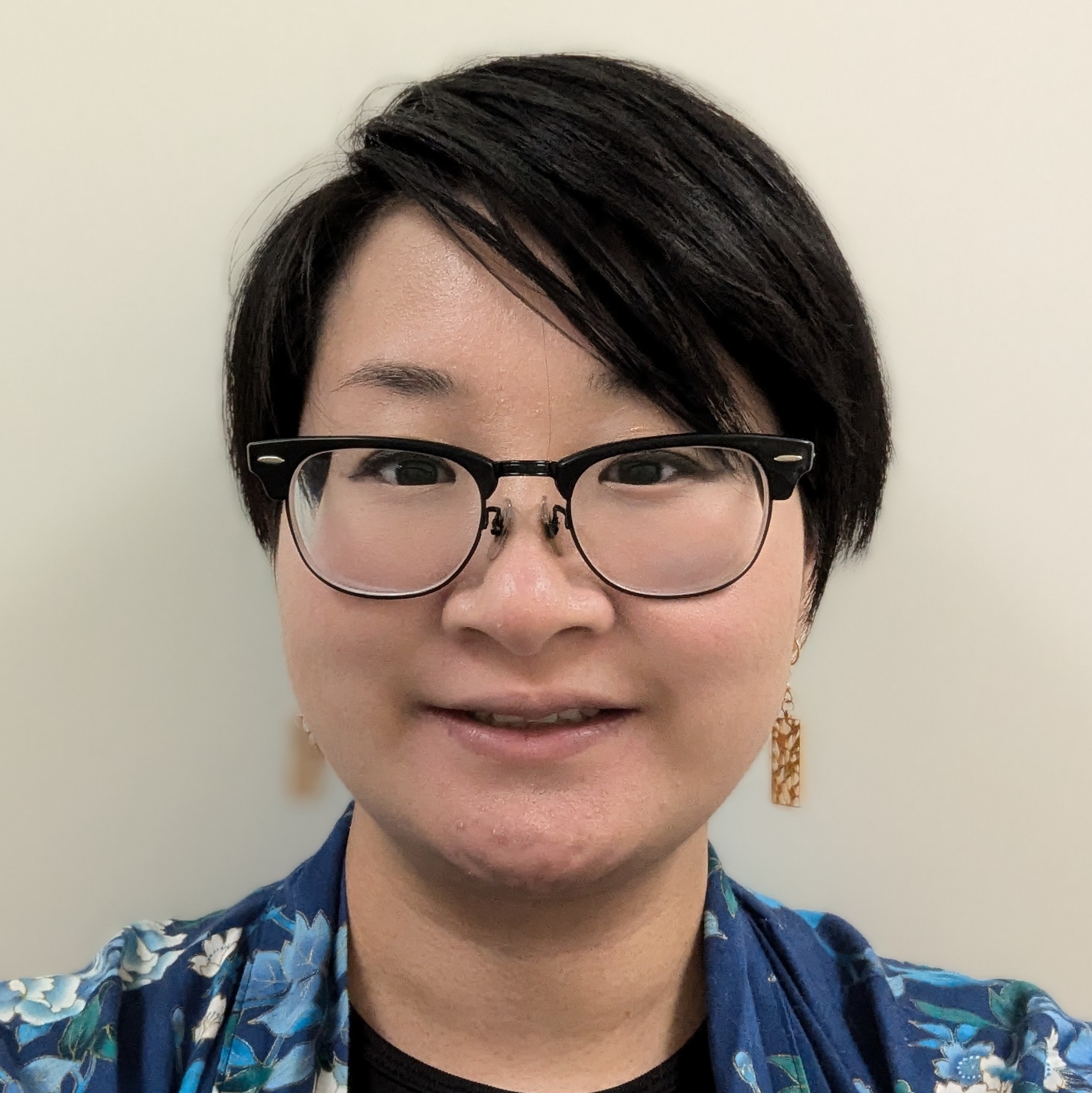
Claire is a second-year PhD student in Brain and Cognitive Sciences, working under the supervision of Cora Iordan. Her research focuses on how humans summarize information, exploring how this cognitive process may align with Event Segmentation. She is particularly interested in the interplay between neural network models and human cognition—how these models can deepen our understanding of cognition, and how insights from neuroscience can guide the development of more biologically plausible neural networks.
@inproceedings{walden_cross-document_2025,
    title = "Cross-Document Event-Keyed Summarization",
    author = "Walden, William  and
      Kuchmiichuk, Pavlo  and
      Martin, Alexander  and
      Jin, Chihsheng  and
      Cao, Angela  and
      Sun, Claire  and
      Allen, Curisia  and
      White, Aaron",
    editor = "Fei, Hao  and
      Tu, Kewei  and
      Zhang, Yuhui  and
      Hu, Xiang  and
      Han, Wenjuan  and
      Jia, Zixia  and
      Zheng, Zilong  and
      Cao, Yixin  and
      Zhang, Meishan  and
      Lu, Wei  and
      Siddharth, N.  and
      {\O}vrelid, Lilja  and
      Xue, Nianwen  and
      Zhang, Yue",
    booktitle = "Proceedings of the 1st Joint Workshop on Large Language Models and Structure Modeling (XLLM 2025)",
    month = aug,
    year = "2025",
    address = "Vienna, Austria",
    publisher = "Association for Computational Linguistics",
    url = "https://aclanthology.org/2025.xllm-1.19/",
    pages = "218--241",
    ISBN = "979-8-89176-286-2",
    abstract = "Event-keyed summarization (EKS) requires summarizing a specific event described in a document given the document text and an event representation extracted from it. In this work, we extend EKS to the cross-document setting (CDEKS), in which summaries must synthesize information from accounts of the same event as given by multiple sources. We introduce **SEAMuS** (**S**ummaries of **E**vents **A**cross **Mu**ltiple **S**ources), a high-quality dataset for CDEKS based on an expert reannotation of the FAMuS dataset for cross-document argument extraction. We present a suite of baselines on SEAMuS{---}covering both smaller, fine-tuned models, as well as zero- and few-shot prompted LLMs{---}along with detailed ablations and a human evaluation study, showing SEAMuS to be a valuable benchmark for this new task."
}